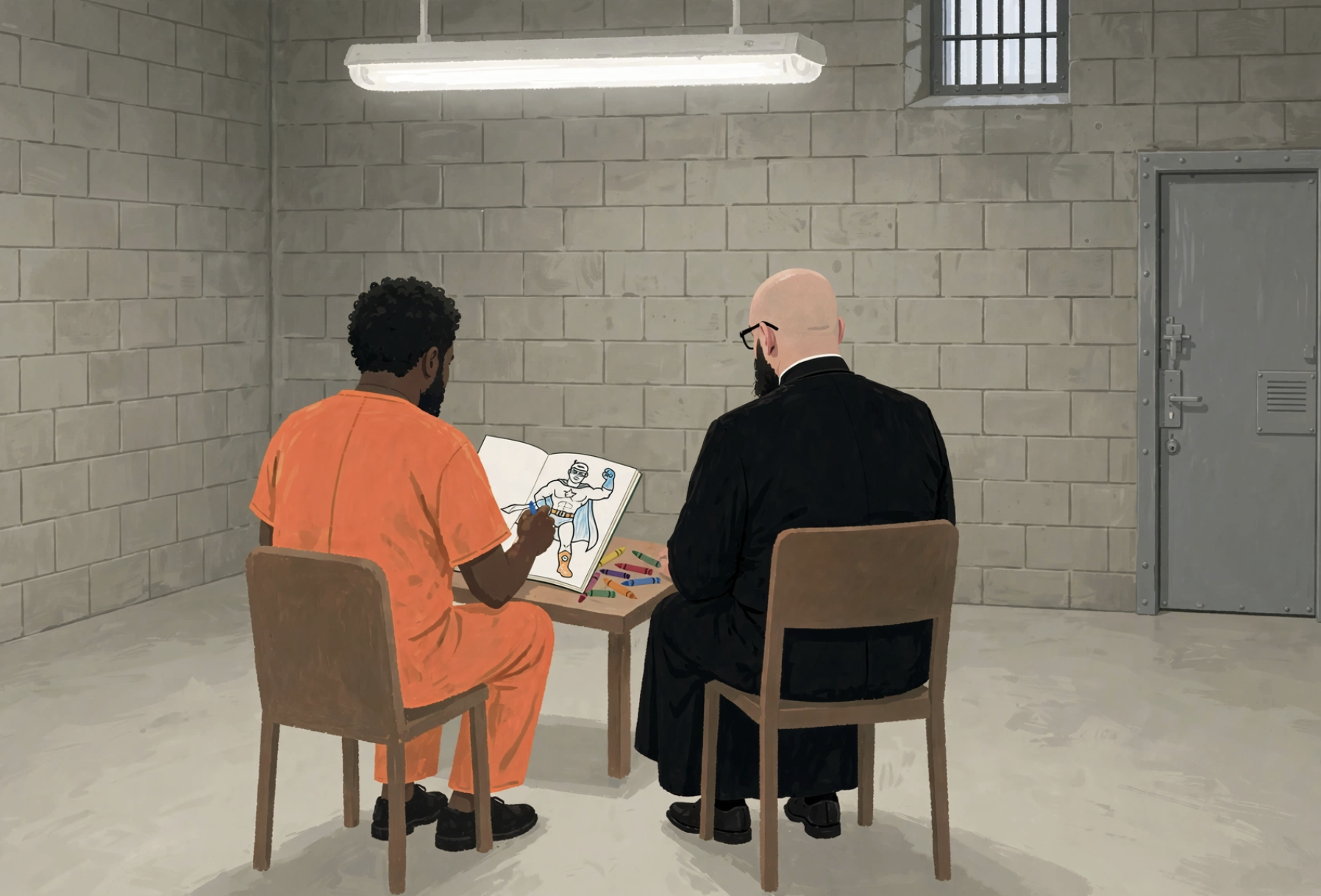
1997
Medical history
A gunshot wound at seventeen
Three years before the crime, Jamaal was shot in the head. His later appeals argued that trial counsel failed to present the injury as mitigation.

Begin with the truth.
On May 12, 2000, Jamaal Howard—then 20—shot and killed Vickie Swartout, a 42-year-old clerk, during a robbery at a Chevron in Silsbee, Texas.
This case begins with irreversible harm. It also asks a separate constitutional question: can Texas execute someone who may not rationally understand why he is being executed?
Source: Howard v. State, Tex. Crim. App. 2004For more than two decades, the two have moved beside each other without meeting in an evidentiary hearing.
Source: Jamaal Howard — The Court Record (PDF)Three years before the crime, Jamaal was shot in the head. His later appeals argued that trial counsel failed to present the injury as mitigation.
The defense requested an evaluation the day before jury selection. The first competency jury deadlocked; a second found Jamaal competent in 47 minutes.
Court-appointed psychologist Dr. James Duncan estimated intellectual functioning in the 65–70 range, questioned competency, and raised possible schizophrenia.
Within months, Jamaal entered the Jester IV psychiatric unit. Records described mutism, self-mutilation, chronic schizophrenia, and rapid decompensation.
After the application sat for nine years, the court adopted findings that Jamaal was not mentally ill despite years of prison psychiatric diagnoses in the record.
The Fifth Circuit denied a certificate of appealability in 2020. The U.S. Supreme Court denied review on January 11, 2021.
Texas set an October 7 execution date. The campaign asks the trial court to hold a hearing on whether Jamaal rationally understands why he is to be executed.

Three years before the crime, Jamaal was shot in the head. Trial counsel never presented the injury as mitigation.
Estimated intellectual-functioning range reported by court-appointed psychologist Dr. James Duncan — roughly the level of an 11- to 12-year-old. He questioned Jamaal’s competency and raised possible schizophrenia.
Defense psychiatrist Dr. Fred Fason documented that Jamaal’s schooling effectively collapsed after the second grade, and that he could not complete a standard personality test because he did not understand basic words.
Within months of arriving on death row, Jamaal was admitted to the Jester IV psychiatric unit. Records describe him urinating on the walls, mute, and deteriorating.
He returned to Jester IV with chronic schizophrenia, self-mutilation, and rapid decompensation documented in prison records.
By October 2002, prison records show his Haldol had reached the maximum dosage.
Every prison clinician who has treated him since carries the schizophrenia diagnosis. He remains on antipsychotic medication today.
Without holding a hearing, Judge Steven Thomas signed the State’s proposed findings declaring Jamaal was not mentally ill — despite years of psychiatric diagnoses already in the record.
Jamaal recently told a penpal he is being executed because the victim reached out to catch one of his bullets — the kind of statement at the heart of the competency question the courts have never heard.
These facts are drawn from the supplied court record and campaign summary. The State’s trial expert, Dr. Gripon, disputed the schizophrenia diagnosis.
Source: The Mind of Jamaal Howard — an exhaustive review
His state and federal appeals ended without an evidentiary hearing on these claims.
Source: Howard v. Davis, Fifth Circuit 2020“The Constitution forbids executing a person who cannot rationally understand why he is being executed.”
The legal question now is competency to be executed—not whether the crime occurred. According to a pen pal cited by the campaign, Jamaal recently described the execution through a delusional account involving the victim catching a bullet from the air.
Source: Ford v. Wainwright, U.S. Supreme Court 1986
One phone call. Two minutes.
Call the Governor’s office at 512-463-2000 and read this message:
“Hi. My name is [your name]. I am calling to ask for Gov. Abbott’s help in stopping the execution of Jamaal Howard on October 7, 2026. Mr. Howard lives with severe intellectual disabilities and serious mental illness. Texas is preparing to kill a man who cannot fully understand what is being done to him. I know the Governor cannot act alone, but he appoints the Board of Pardons and Paroles. He can urge the Board to look closely at Mr. Howard’s case and to recommend mercy. As a person of faith, the Governor has the power to save this man’s life. Please help us. Please do not let Texas execute Jamaal Howard.”Call 512-463-2000 now Read the case against the execution